Study Spotlight

Persistent Chemotherapy-Induced Alopecia (PCIA)

This Breast Cancer Awareness Month we are highlighting an often-overlooked side effect of chemotherapy: persistent chemotherapy-induced alopecia (PCIA). Whilst many are familiar with temporary hair loss during treatment, including for breast cancer, fewer patients are aware of the risk of PCIA associated with certain chemotherapy regimens. We are committed to raising awareness and providing further information to help make this a side effect of the past.

“It’s never just hair. Never.”

Shirley Ledlie, Patient Advocate, Ahead of Our Time

What is PCIA?

What is PCIA? Dr Bevin Bhoyrul explains more

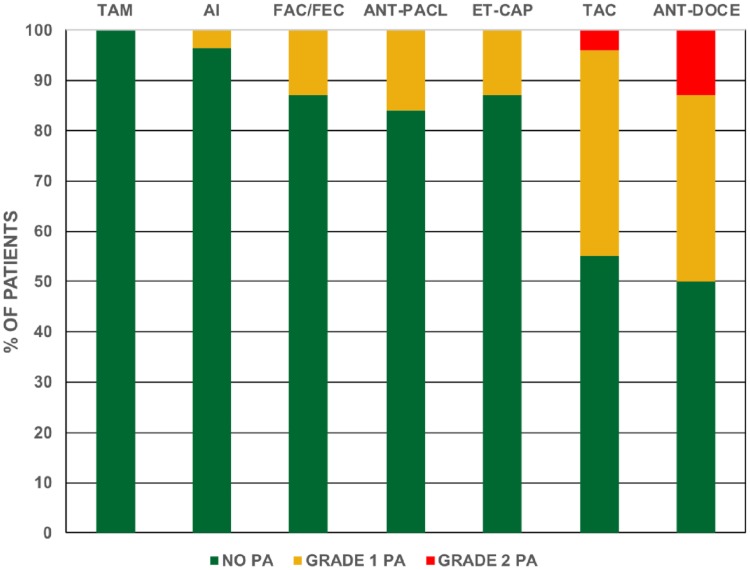
Persistent chemotherapy-induced alopecia, or PCIA, is hair loss that continues for more than six months after chemotherapy treatment ends, and in some cases, it can be permanent1 . Damage to the hair follicles caused by certain chemotherapy drugs such doxorubicin, epirubicin and more notoriously, taxanes, such as paclitaxel and docetaxel, can lead to incomplete or altered hair regrowth, severely impacting a patient’s quality of life2 

Chemotherapy-induced alopecia begins after one to three weeks of treatment and is usually reversible, growing back between 3 to 6 months after the final chemotherapy session. When regrowth is absent or incomplete 6 months after chemotherapy, this would be considered as PCIA.

It doesn’t affect a large percentage of patients, but it is something no one should have to go through.

"You go to bed and the last glimpse you’ve had is your cancer diagnosis. It affects every aspect of your life... you no longer have a spontaneous life.”

Shirley Ledie
Patient Advocate, Ahead of our Time

PCIA can affect up to 10-30% of patients receiving taxanes, usually docetaxel, with a cumulative dosage of over 400 mg/m2.3 However, in a 2024 study by D. Kang et al. titled Scalp Cooling in Preventing Persistent Chemotherapy-Induced Alopecia: A Randomized Controlled Trial up to 50% of the control group (who did not scalp cool) experienced PCIA.4 

10-30%

of patients using taxanes can be
effected by PCIA

Persistent vs Permanent Alopecia

There is some debate about whether PCIA refers to persistent or permanent chemotherapy-induced alopecia. For some patients, hair loss is permanent, and it will sadly never grow back. Clinicians are hesitant to call PCIA permanent as there have been cases where the hair does grow back eventually, to a certain extent. At present, it remains to be shown as to whether some patients with PCIA will have their hair grow back.

"It really can affect a woman’s self-esteem and can make people really anxious. People that don’t know me assume that I may be having treatment still… It can be really quite uncomfortable."

Jo Knight,
Patient Advocate, Preloved Reloved

Awareness of PCIA

There is a common misconception that hair loss is always reversible after chemotherapy. Not all cancer patients are aware of the risk of PCIA with certain regimens and sadly, not all patients are appropriately informed before choosing to undergo chemotherapy.

As quoted by Dr Bevin Bhoyrul during the 2022 Scalp Cooling Summit, in a recent study he carried out, up to 8% of women would refuse chemotherapy if they knew about the side effect of PCIA. It is important that patients understand the risks but are also offered alternatives if they wish to mitigate it. Offering patients an alternative regimen is one method; scalp cooling is another. Listen to Dr. Bhoyrul speak about his experience with PCIA.

In the aforementioned study by Kang et al., researchers found that scalp cooling was effective at preventing PCIA5 and should therefore be offered to patients.


Scalp Cooling and PCIA

In 2024, the PCIA study by D. Kang et al., Scalp Cooling in Preventing Persistent Chemotherapy-Induced Alopecia: A Randomized Controlled Trial was published in the Journal of Clinical Oncology. This randomised trial was conducted to evaluate the efficacy of scalp cooling in reducing persistent chemotherapy-induced alopecia 6 months after chemotherapy.

Between December 2020 and August 2021, 139 patients were randomly assigned groups, at a 2:1 ratio; scalp cooling or usual clinical practice (control group). Their hair thickness and density were measured 6 months after chemotherapy. Patients in the scalp cooling group used Paxman’s PSCS2.


Patients in the intervention group wore the cooling cap for:

20 minutes

additional after taxane-based therapy

30 minutes

before chemotherapy treatment

90 minutes

additional after doxorubicin-based or combination therapy

Results and findings

Control group: 50
52% developed PCIA
Scalp cooling group: 89
13.5% developed PCIA
The study yielded three clinically meaningful outcomes about scalp cooling:
Significantly reduced the incidence of PCIA
Promoted faster recovery of hair density & thickness
Reduced psychological distress and improved quality of life
In conclusion, this randomized clinical trial showed that scalp cooling reduced the incidence of PCIA, primarily by increasing hair thickness compared with control. Scalp cooling is helpful in promoting qualitative hair regrowth. This effect on hair quality is perceived by the patients and significantly enhances their social and psychological quality of life.

"Our study provides trichoscopic evidence that wearing a scalp cooler helps reduce damage to hair follicles so that when hair grows back after chemotherapy, it grows faster and is more likely to be thicker. Recently, cancer treatment has focused on patient-centred care. Healthcare providers now need to allow patients to choose evidence-based therapies such as scalp cooling."

Dr. Cho & Dr. Ahn, Co-authors

Understanding the impact of PCIA

In order to even slightly comprehend the detrimental effects of PCIA on a person’s quality of life, it is important to understand the journey and struggles of those living with the condition. Paxman spoke to two influential individuals with PCIA, Shirley Ledlie and Jo Knight, who both use their experiences of cancer and PCIA to help others.

Shirley’s Experience

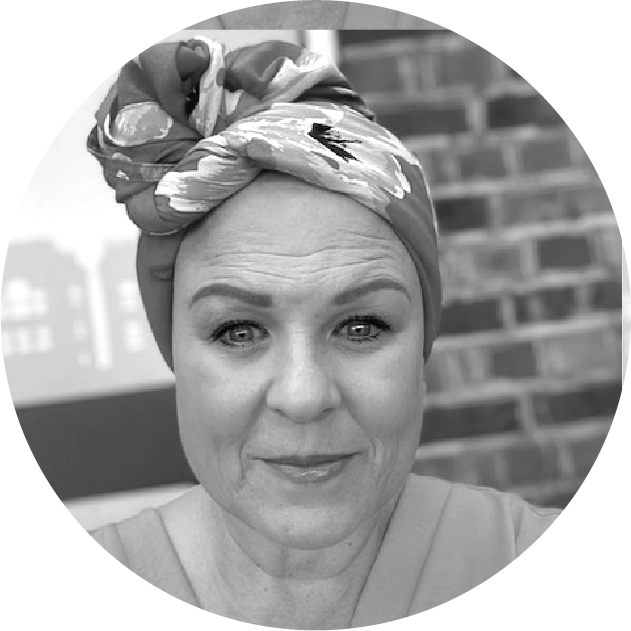
Shirley Ledlie is the president of Ahead of our Time, a non-profit association for people with PCIA and co-founder of a global support group.

As well as being a patient advocate, Shirley is also an author and writer, who believes patients should be informed of the possibility of PCIA and that scalp cooling should be offered as standard when the risk is present.

In an interview with Paxman, Shirley shared her touching story of living with PCIA, life after cancer and her views on how potential hair loss should be addressed by oncologists.

The Ahead of Our Time association provides a support network for women and shares even more information, including a free dossier, to allow patients to advocate for themselves.

Jo's Experience

Jo Knight was diagnosed with an ER positive, HER2 negative breast cancer in 2017, lost the majority of her hair during chemotherapy and suffers from PCIA. Jo now uses her experience to help others battling cancer through the community she has built on social media.

Jo wasn’t given any information about the risk of PCIA or the choice to scalp cool, assuming her hair would grow back. We asked Jo to speak about her experience.

Life After Cancer Matters

Cancer treatment should also take into consideration the patient’s quality of life after treatment, where possible. PCIA is more than just hair loss, it’s a lasting reminder of the battle people have faced as a patient. The emotional and psychological toll can be profound, affecting self-esteem, identity, well-being and many other aspects of life. Shirley and Jo are two examples of an issue that affects so many women, that could have been mitigated through scalp cooling. By offering scalp cooling as a preventative measure, it gives patients the choice they deserve about their treatment, potential outcomes and life after cancer.

Positive Outcomes with Scalp Cooling

Scalp cooling has helped patients across the world not only to retain some of their hair but also to promote regrowth after chemotherapy. Paxman has even noticed certain patients in the Paxman Scalp Cooling Facebook Group citing hair regrowth and follicle protection as their primary motivation for scalp cooling.

Emma from the UK received docetaxel, a drug known to cause PCIA, as part of her chemotherapy regimen for stage 2 triple positive breast cancer. She cited hair regrowth as a key part of moving on from chemotherapy and her diagnosis.

Cancer treatment takes so much from you which includes your physical appearance, and the change is a constant reminder. My hair regrowth has been a huge part of my moving forward and feeling better and the cold cap has given me a piece of myself that cancer had stolen much sooner.

Emma,
Patient
Giuli, who was treated with cyclophosphamide and docetaxel in Nebraska was aware of the PCIA risks associated with her regimen.

Giuli was very happy when she retained around 40-50% of her hair and people could not tell. Whilst we don’t know for certain whether Giuli would have suffered from PCIA, her decision to scalp cool means that the prospect of permanent alopecia is something she never has to think about.

I’m a very facts and data driven person, and I had read the studies around TC chemo causing permanent alopecia. I was fine with losing my hair, but I wanted it to come back. I focused on regrowth aspect and assumed I would lose all my hair.

Giuli,
Patient
Dr Bevin Bhoyrul, at the 2022 Scalp Cooling Summit, has recently seen fewer patients experiencing PCIA because of scalp cooling, which is now more widely available. In his experience, patients with PCIA today are those who underwent treatment at a time when scalp cooling was not available.
See the difference that scalp cooling makes by visiting our case studies page

Further reading

A study titled ‘Permanent chemotherapy-induced alopecia: awareness and attitudes among health care providers’ by Stoehr et al. published in Support Cancer Care in 2020, identified knowledge gaps among healthcare providers about PCIA. A 25-question survey was designed to elicit general knowledge and awareness of PCIA, as well as attitudes about referral and treatment.

Bhoyrul et al., published an observational study in JAMA Dermatology titled ‘Clinicopathologic Characteristics and Response to Treatment of Persistent Chemotherapy-Induced Alopecia in Breast Cancer Survivors’. The study analysed the characteristics and treatment outcomes of patients with persistent chemotherapy-induced alopecia (PCIA) following breast cancer treatment. It found that most patients experienced diffuse hair loss, often resembling pattern baldness, particularly after taxane-based chemotherapy. Hair regrowth was possible for many patients using topical or oral treatments suggesting that PCIA may be partially reversible.

Both Bhoyrul and Shirley Ledlie were involved in the 2022 Scalp Cooling Summit discussion on Persistent Alopecia and Docetaxel – Low Incidence, High Impact. You can watch the discussion and read the accompanying whitepaper provided at scalpcoolingsummit.com.

For more information on scalp cooling and its role in preventing chemotherapy-induced alopecia, explore the latest research and studies at scalpcoolingstudies.com

References

1 Alopecia UK. “Persistent Chemotherapy-Induced Alopecia (pCIA).” Alopecia UK, accessed 9 September 2024, https://www.alopecia.org.uk/persistent-chemotherapy-induced-alopecia-pcia.

2 Kluger N, Jacot W, Frouin E, et al: Permanent scalp alopecia related to breast cancer chemotherapy by sequential fluorouracil/epirubicin/cyclophosphamide (FEC) and docetaxel: A prospective study of 20 patients. Ann Oncol 23:2879-2884, 2012

3 Persistent Alopecia and Docetaxel – Low Incidence, High Impact - Conversation led by patient advocate Shirley Ledlie with Dr Bevin Bhoyrul, Dr Albane Lhuillier, and Dr Dominique Spaeth. April 2022. Scalp Cooling Summit. https://scalpcoolingsummit.com/wp-content/uploads/2023/03/Persistent-Alopecia-and-Docetaxel-Scalp-Cooling-Summit-Whitepapers.pdf

4 Danbee Kang, Juhee Cho, Di Zhao, Jeonghyun Kim, Nayeon Kim, Hoyoung Kim, Sooyeon Kim, Ji-Yeon Kim, Yeon Hee Park, Young Hyuck Im, Eliseo Guallar, & Jin Seok Ahn. (2024). Scalp cooling in preventing persistent chemotherapy-induced alopecia: A randomized controlled trial. Journal of Clinical Oncology, 00, 1-8. https://doi.org/10.1200/JCO.23.02374

5 Danbee Kang, Juhee Cho, Di Zhao, Jeonghyun Kim, Nayeon Kim, Hoyoung Kim, Sooyeon Kim, Ji-Yeon Kim, Yeon Hee Park, Young Hyuck Im, Eliseo Guallar, & Jin Seok Ahn. (2024). Scalp cooling in preventing persistent chemotherapy-induced alopecia: A randomized controlled trial. Journal of Clinical Oncology, 00, 1-8. https://doi.org/10.1200/JCO.23.02374

6 Persistent Alopecia and Docetaxel – Low Incidence, High Impact - Conversation led by patient advocate Shirley Ledlie with Dr Bevin Bhoyrul, Dr Albane Lhuillier, and Dr Dominique Spaeth. April 2022. Scalp Cooling Summit. https://scalpcoolingsummit.com/session/persistent-alopecia-and-docetaxel/